
At Port City Animal Hospital, breeding isn't just a service — it's a partnership. We work closely with dedicated breeders throughout Pooler, Savannah, and Coastal Georgia to help produce healthy litters through thoughtful planning, precise timing, and experienced veterinary care.
Our team has a strong interest in responsible canine reproduction, combining advanced medical technology with practical, real-world breeding guidance. Whether you're preparing for your first litter or managing a long-term breeding programme, we're here to guide you from start to finish — and every milestone in between.
A Smarter Approach to Dog Breeding
Successful breeding doesn't happen by chance — it's built on timing, health, and informed decisions. That's why we take a proactive, data-driven approach to reproductive care.
Breeding Readiness & Health Screening
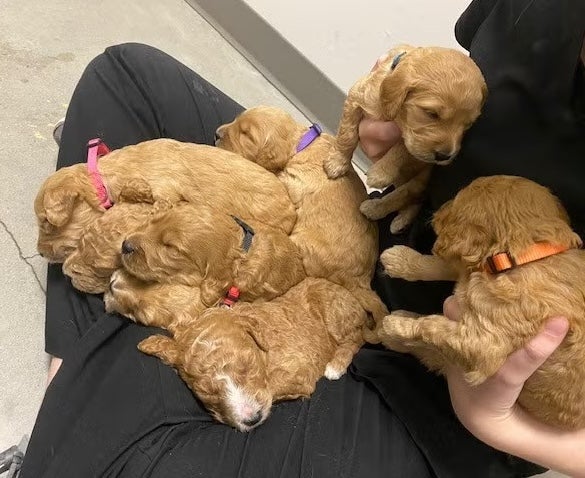 Before any breeding takes place, we focus on setting a strong foundation:
- Comprehensive breeding examinations
- Brucellosis testing to protect both dogs and future litters
- Genetic testing guidance for breed-specific concerns
Our goal is simple: reduce risk, improve outcomes, and protect your programme long-term.
Precision Matters: Progesterone Testing & Ovulation Timing
If there's one factor that makes or breaks a breeding, it's timing. With in-house progesterone testing, we're able to give you fast, reliable answers — without the delays of outside labs. This allows us to:
- Pinpoint ovulation with accuracy
- Identify the most fertile days
- Reduce missed breedings and repeat cycles
For our local Pooler and Savannah breeders, this means fewer guesswork decisions and better success rates.
Male Breeding Services Done Right
We offer complete support for stud dogs, with an emphasis on quality and consistency:
- Semen evaluation and detailed analysis
- Professional semen collection
- Chilled semen preparation and shipping coordination
Whether you're working with a local pairing or collaborating across the country, we help ensure everything is handled correctly, safely, and efficiently.
Artificial Insemination Options Tailored to Your Dog
Not every breeding situation is the same — and your approach shouldn't be either. We offer:
- Trans-vaginal artificial insemination
- Surgical insemination
Our veterinarians will walk you through the pros and considerations of each option so you can make the best decision for your dog and your breeding goals.
What is the procedure for surgical insemination?
Surgical insemination is what it sounds like — a surgical procedure. An incision is made similar to a spay under general anaesthesia. Your veterinarian will do blood work, an EKG, IV fluids, and possibly more in advance. They'll anaesthetise the female, exteriorise her uterus far enough to adequately see where they want to put the semen, place a catheter or a needle into the uterus, and inject the semen. The female is then closed up with sutures and sent home the same afternoon.
The alternative is transcervical insemination, done with a rigid endoscope, and the female is awake. There is no anaesthesia and no surgical incision. By using a scope instead of surgical insemination, you can still deliver semen frozen, fresh, and fresh-chilled directly into the uterus without anaesthesia and the stress of a surgical procedure.
Is there a sperm bank for dogs?
There are many sperm banks for dogs, and some are even franchises. There are also some outside veterinary clinics that have independent semen banks and receive semen from all over the world. We are able to assist you in locating these organisations.
Early Pregnancy Confirmation with Ultrasound
We can confirm pregnancy as early as 22 days post-ovulation, while also:
- Monitoring foetal development
- Checking for early concerns
- Giving you peace of mind sooner
Know What to Expect: Puppy Counts with Radiographs
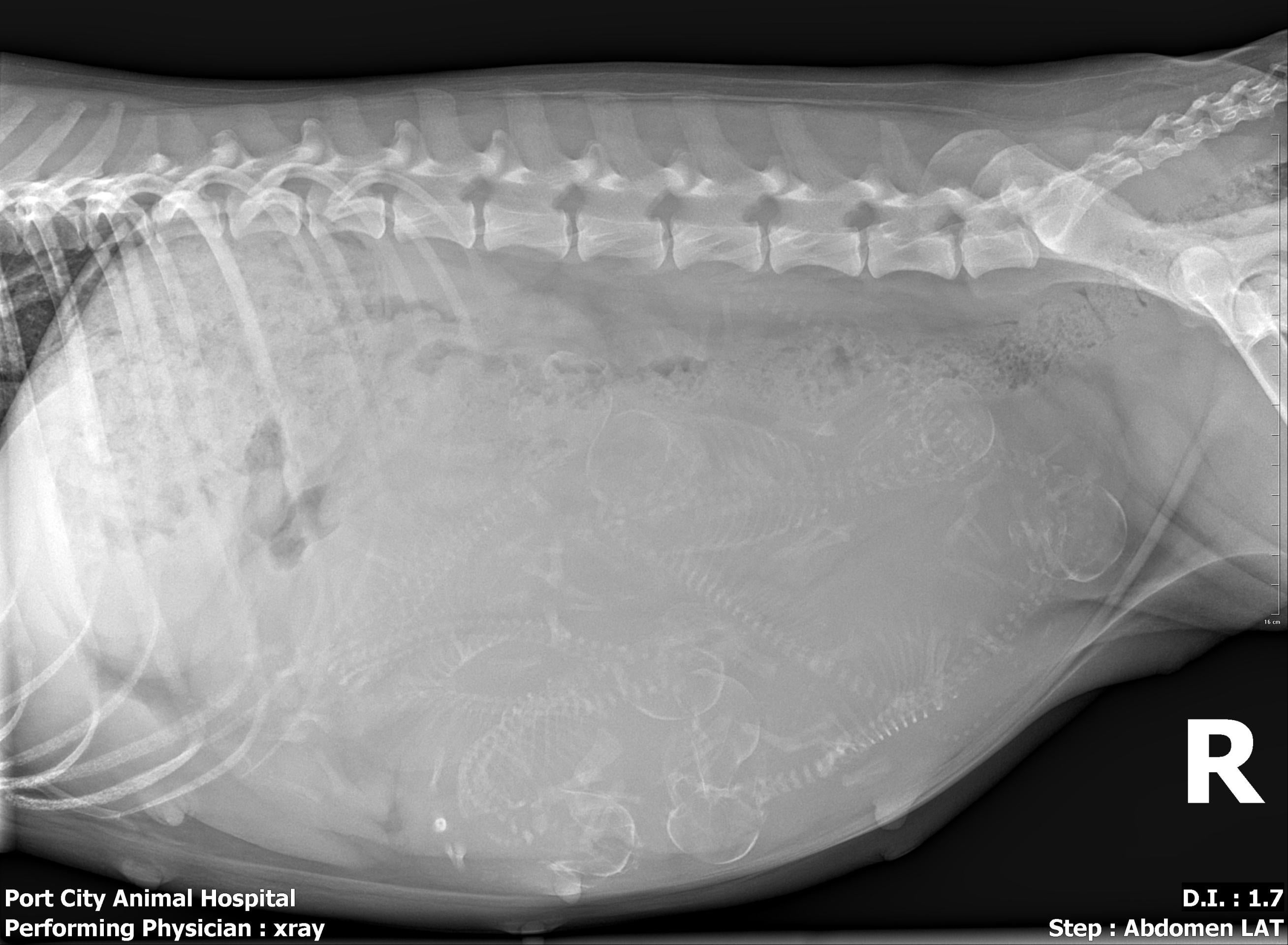
As your dog gets closer to delivery, radiographs allow us to accurately count puppies, helping you prepare for whelping with confidence — no surprises.
Take the Guesswork Out of Due Dates
Because we track ovulation so closely, we can provide a much tighter whelping window than traditional estimates. That means:
- Better preparation
- Reduced stress
- Safer deliveries
Whelping Support & Planned C-Sections
Some dogs need extra support during delivery — and planning ahead makes all the difference. We provide:
- Scheduled (planned) C-sections with precise timing
- Whelping support and preparation guidance
- Rapid response if complications arise
Our focus is always on protecting both mum and puppies while minimising risk.
Neonatal Care & Early Puppy Support
The first few days of life are critical. We're here to help you navigate them with confidence. Our neonatal care includes:
- Newborn assessments immediately after birth
- Monitoring for early health concerns
- Practical guidance on feeding, weight gain, and development
Think of us as an extension of your team during those first important weeks.
Why Breeders in Pooler & Savannah Choose Us
Breeders choose Port City Animal Hospital because we go beyond basic services — we offer consistency, communication, and real partnership.
What sets us apart:
- In-house testing for faster, more accurate decisions
- A team that genuinely enjoys working with breeding dogs
- Clear communication (no guessing, no confusion)
- Support that continues from planning to post-birth care
We understand the time, effort, and care that goes into breeding — and we match that commitment on our end.
Local, Accessible Reproductive Care
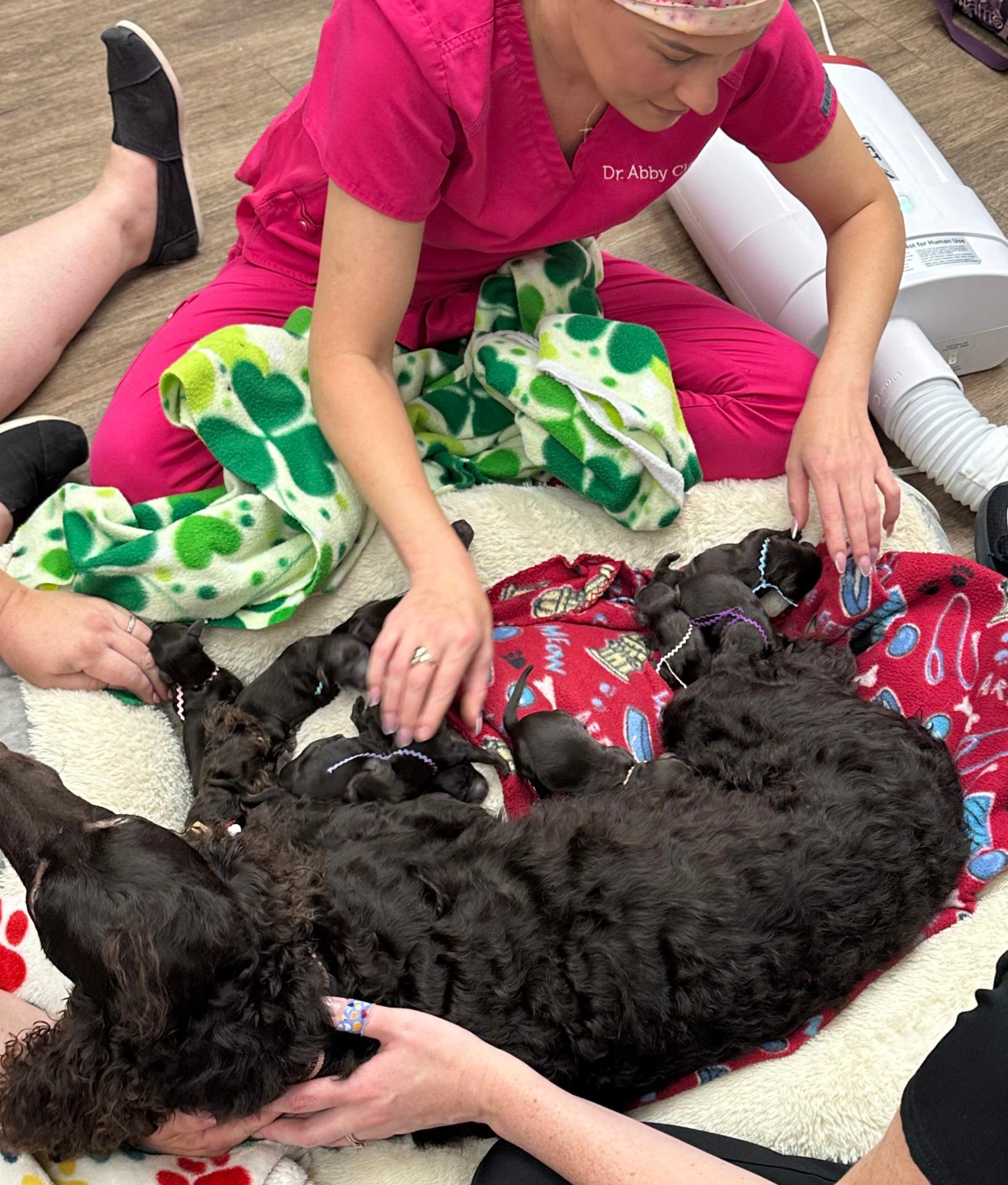
We're proud to support breeders across:
- Pooler
- Savannah
- Rincon
- Richmond Hill
- Hilton Head
- Surrounding communities
Having a trusted reproductive veterinarian nearby means faster answers, better timing, and less stress throughout the process.
Let's Plan Your Next Litter — The Right Way
Whether you need progesterone testing this week or full-cycle breeding support, our team is ready to help you move forward with confidence.
Call or text (912) 525-0255 to schedule your breeding consultation and experience a more precise, supportive approach to canine reproduction.
There are a couple of kinds of interventions for whelping, which is the process of a dog giving birth to puppies. Most people whelp their dogs at home and don't need much veterinary assistance. If needed, veterinarians offer scheduled C-sections and emergency C-sections, as do most clinics offering canine reproductive services. There's also a telemedicine service called Whelp Wise, which is a uterine contraction monitoring service. You rent equipment and put a uterine contraction monitor on your dog twice daily. It assesses the quality of the uterine contractions, the length, and timing. If whelping assistance is needed, injections of calcium or oxytocin can be administered based on what they see on the uterine contraction monitoring. If things aren't going well, you can always decide to change from a whelping at home to a whelping with veterinary assistance, which generally means a C-section.
Yes, we do a lot of caesarean sections at Port City Animal Hospital. There are some breeds of dogs that are predisposed to dystocia, which is difficult whelping.
Dog breeds that have difficulty whelping are short-faced dogs such as:
- Pugs
- Bulldogs
- French Bulldogs
- Shih Tzus
- Pembroke and Cardigan Welsh Corgis
- Greater Swiss Mountain Dogs
- Bernese Mountain Dogs
For those breeds, instead of waiting until you're in trouble or potentially losing puppies, your veterinarian should schedule a C-section. Suppose progesterone testing is done in advance, and your veterinarian can very specifically assess which day the female ovulated. In that case, you can schedule a C-section during regular hours without needing an emergency clinic.
There are breeds of dogs that need reproductive assistance, such as the short-faced brachycephalics mentioned above. Other dogs may encounter an age issue, or possibly a hip issue or other health concern. It's not universally brachycephalic breeds that need help. Corgis also don't have great success with natural breedings and frequently need intervention with some kind of insemination.